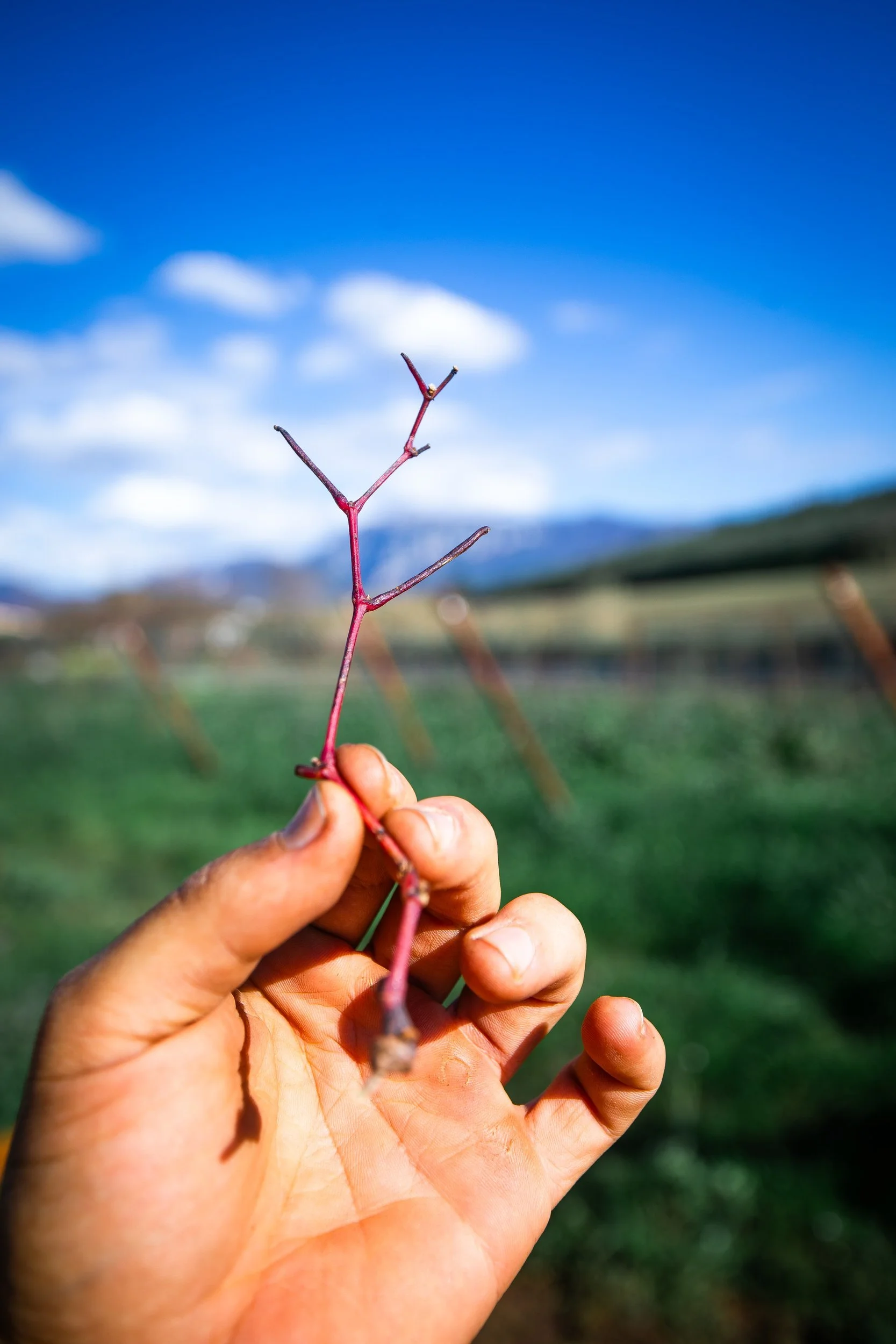
Where It All Begins
Battipaglia · Piana del Sele · Campania
Vines two years in the ground, on land the family has held since 1975.
Five kilometres from the sea, half an hour from the temples of Paestum. The vines will not tell us what they are for another eight years. Everything here is an invitation to come along in the meantime.
The land
Sele plain, five kilometres from the sea.
River alluvium over clay, in a plain that has grown food for as long as anyone has written things down. Flat, fertile, never fashionable for wine — which is why there was land here to plant, and why nobody had already decided what it should taste like.
Soil — deep, cool, slow to give up water. Water — the Sele, and sea air at four every afternoon. Air — salt from the west, cold off the Cilento at night; the gap between them keeps acidity in the fruit. Practice — farmed organically, not certified, and we would rather say so plainly. Hand-worked, deliberately small.
0.8 hectares in two parcels. Aglianico and Fiano, Campania’s own; Syrah, for a climate exactly like this one. Somewhere around 2032 the roots will be deep enough to say what the plain tastes like.
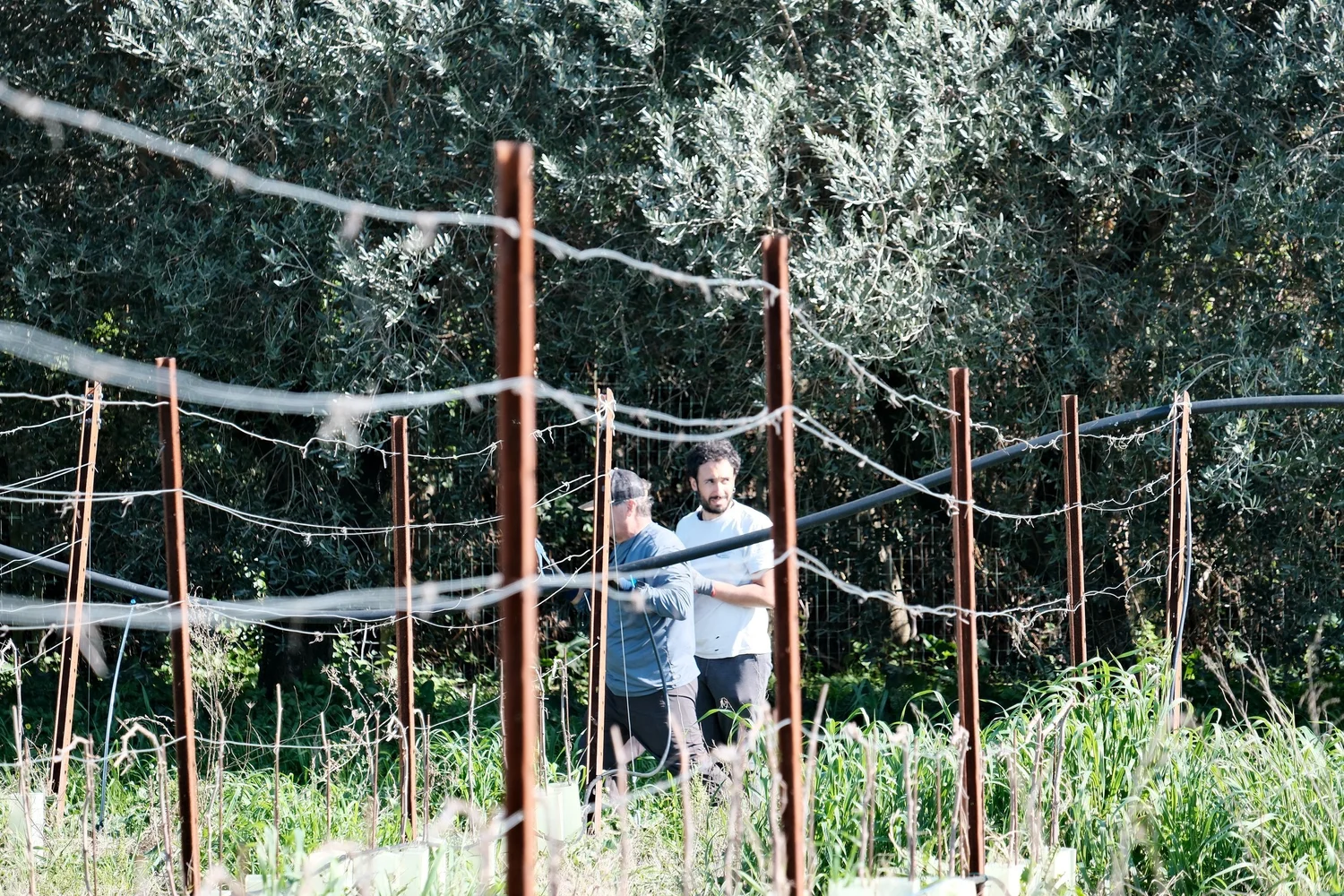
The year
Four jobs. Four tables. Four kinds of light.

Spring — growth
Bud break: two weeks where the whole plain turns the colour of a green apple and nobody sleeps well.

Summer — labour and sun
Work before seven, work after six. The long table goes down the middle of the rows at dusk, because the light lasts until nine.
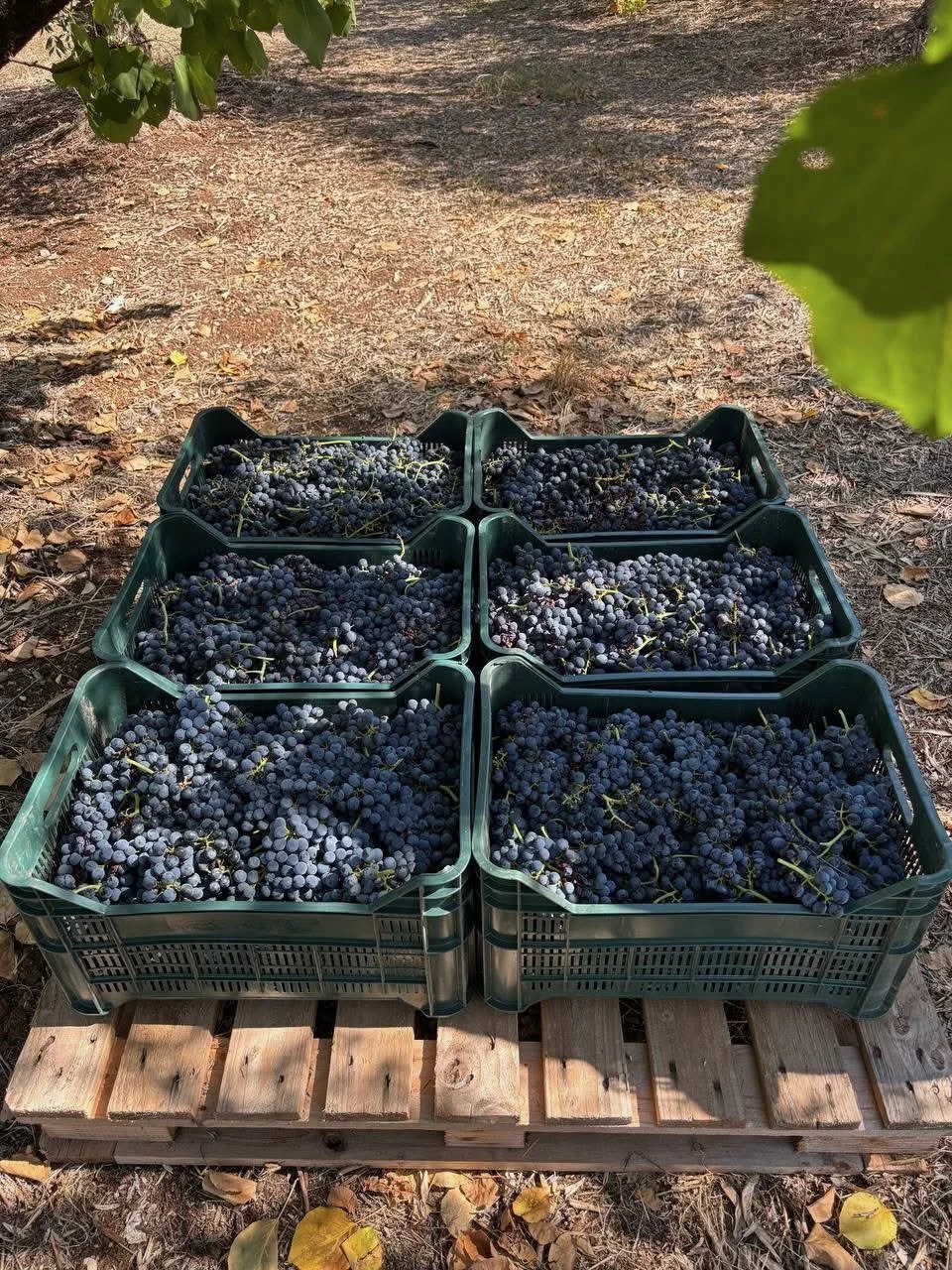
Autumn — harvest
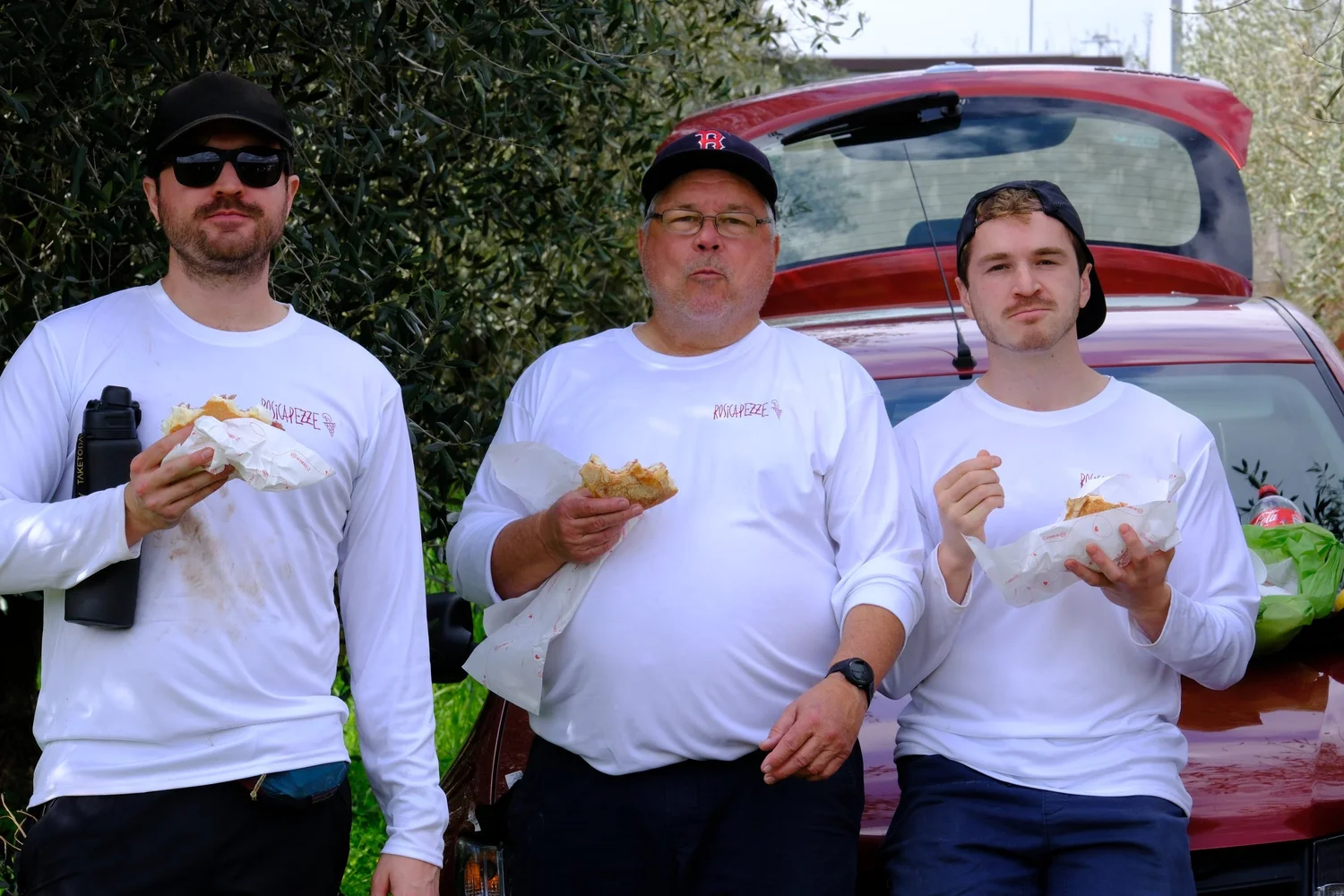
Picking starts at dawn and lunch starts when it stops. Exactly when to pick is the single most consequential judgement anyone here makes.

Winter — rest
Pruning, mending, waiting. Every cut made now is a decision about next year’s crop. The new oil is on the table while it is still cloudy and tastes of grass.
2026, as it happened


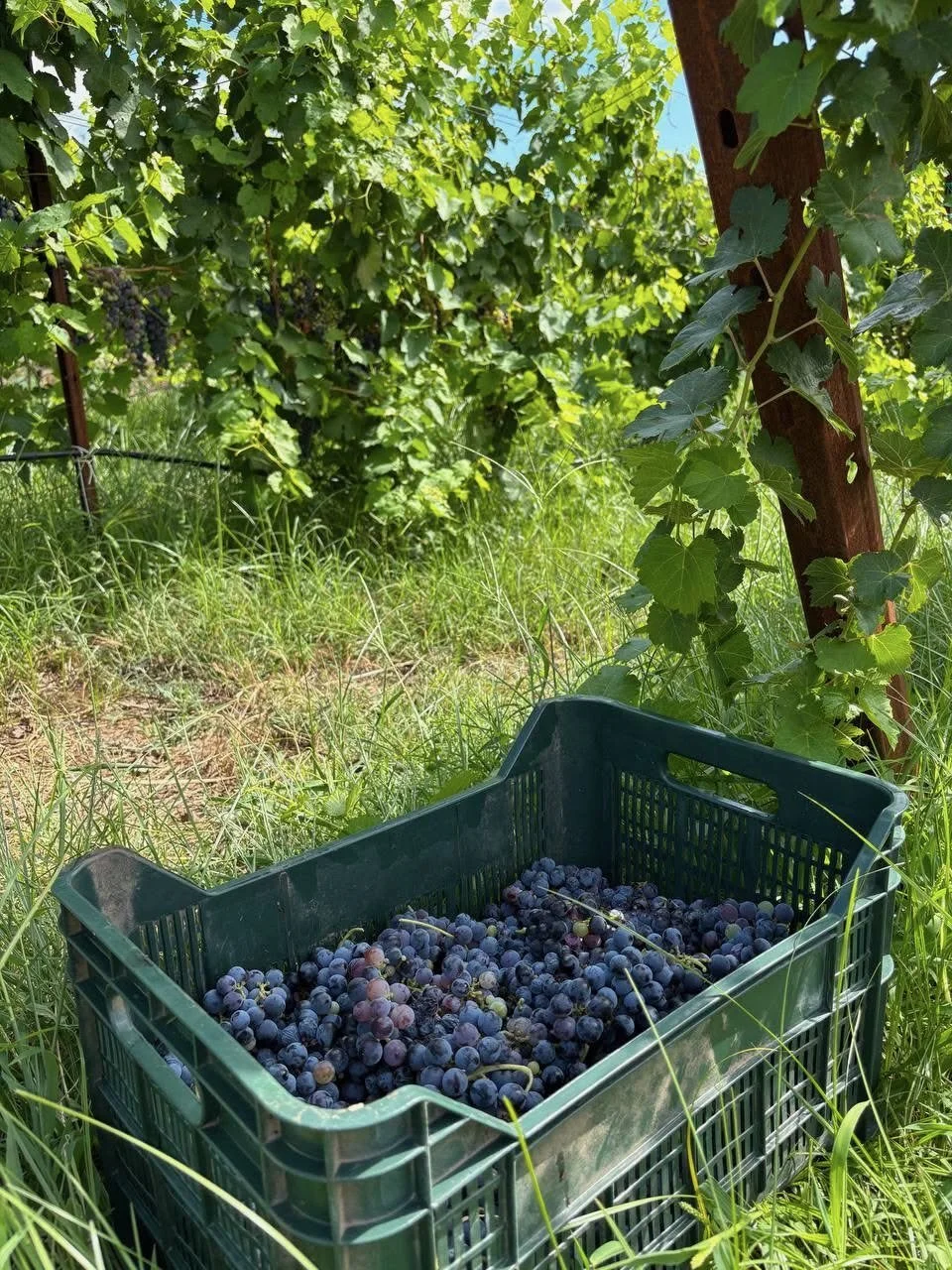
Invitation · September
Harvest — September
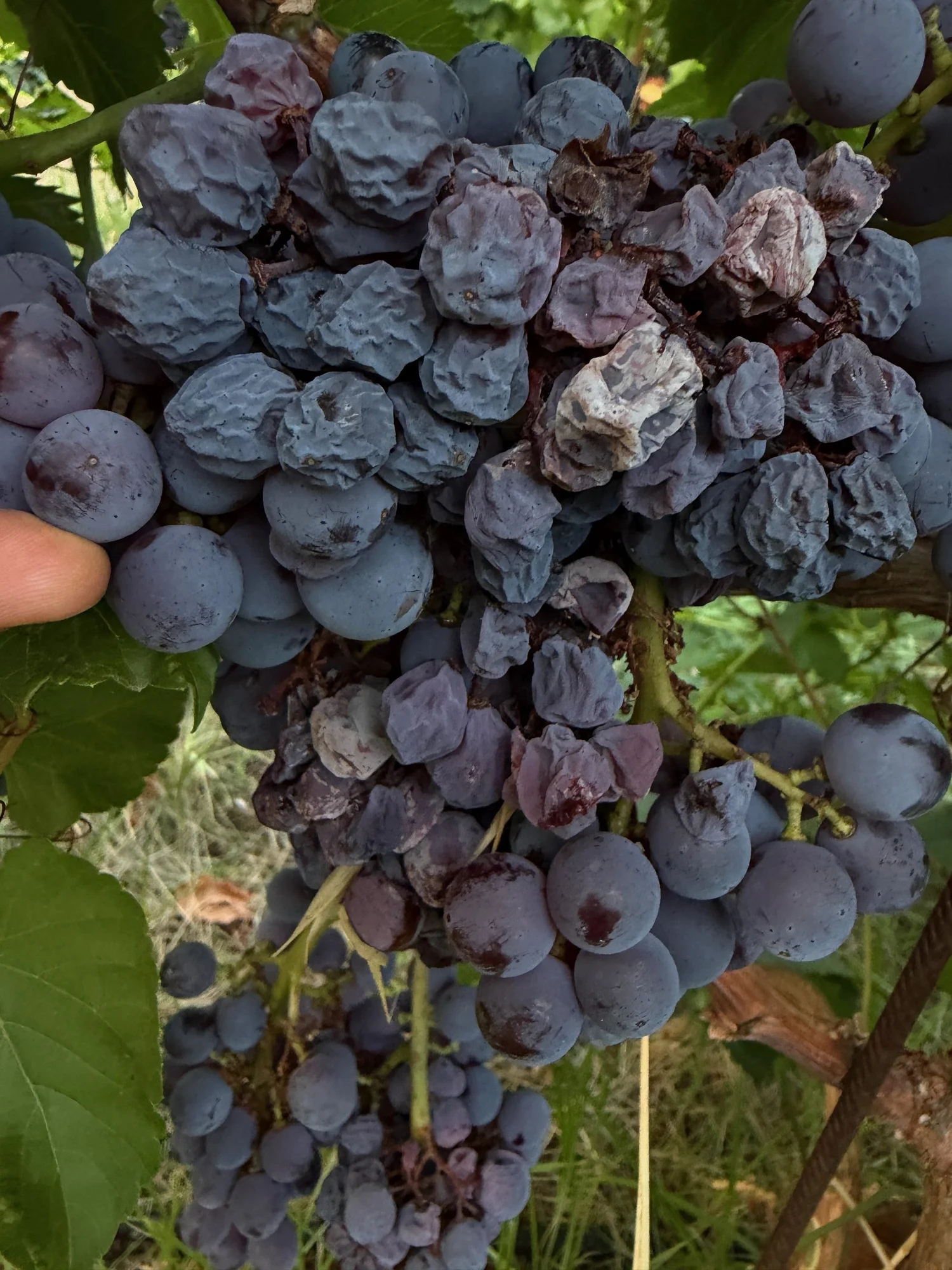
Pick by hand at dawn and sit down to a long lunch under the olives when the picking stops. It is the most honest day in the wine calendar, and the one we open to guests — not as spectators but as pickers, because the work is the point.
The first harvest happened this September: Syrah, off the vines planted in 2024, into crates by hand, by family and by friends who thought they were coming for lunch. Nobody was paid. There was no groundbreaking here either — a caravan, a borrowed truck, and three winters of weekends.
Nothing is bookable yet. Dates for next September open first to the people on the letters list.
The wine is being made
At Firosa
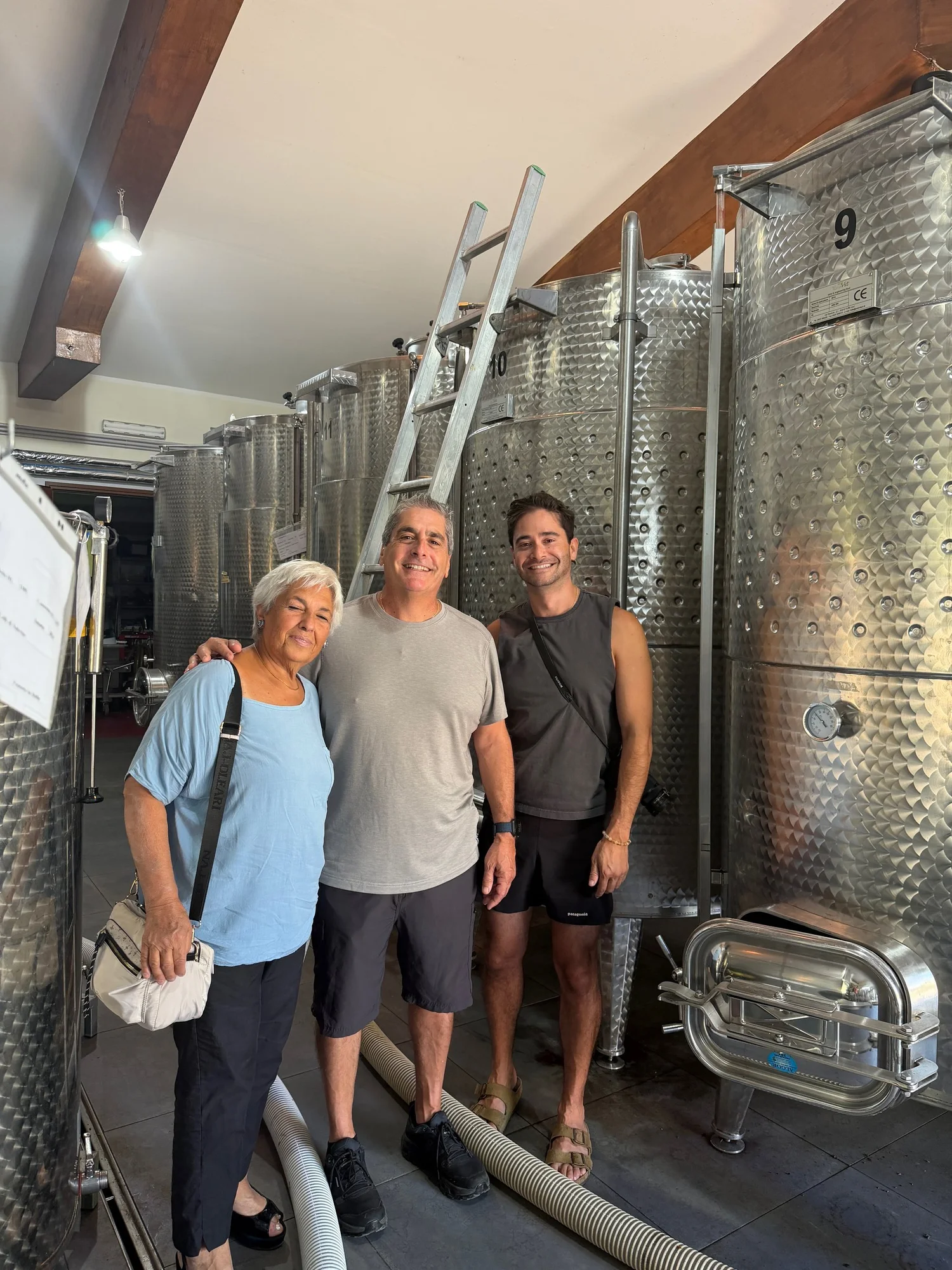
There is still no wine. The grapes went to Gerardina Di Cunzolo’s cantina, Firosa, where our wine is being made — pressed, in tank, and not to be hurried. We will say when it is ready, and not before.
Invitation · mid-February
Pruning — mid-February
Every cut made now is a decision about next year’s crop, taken months before there is anything to look at. Cold mornings, secateurs, a hand on the wire checking what came through the winter. The quietest work on the estate, and the one that decides the most.
We open a pruning week in mid-February, the way we opened the harvest: to a few, first.
The story
A war, an ocean, and a family that never sold.
1940 · “When will I return home?” Lucio was a young man from Salerno, by the sea. He volunteered, understanding one thing: a man who served might come home with land to pass on. Before he left, he planted. Captured in North Africa and shipped east to Ceylon, he cooked for the men who guarded him and ate the potato skins — both still repeated at this table eighty years later.
1943 · “I’ll be waiting with a red rose.” When Italy changed sides, so did his war; he finished it working for the other side of it, as a great many ordinary Italians did. He already knew the woman he would marry. She had told him there would be a red rose. Of everything in this story, that is the line the family has kept most exactly.
1975 · The trucks bought the land. What he brought back from the war was not a medal. It was a trade. He built a company repairing military vehicles, and in 1975 he bought this ground with money made from the wreckage of that same war. There was one line of olive trees on it. That was all.
The daughters · “What binds us does not break.” Here the houses pass to the men and the land passes to the women. It keeps the ground undivided, in hands unlikely to sell it. It came down to Lucio’s granddaughter, Gerardina Di Cunzolo, who holds it now. Two hundred olive trees went in during the nineties, with broccoli and eggplant between them to pay for it. Through the fallow decades, when the ground made almost nothing, nobody sold.
2021 · “Shall we start a vineyard?” Enrico asked it at a table, half a joke. It took three years to answer: plants bought in 2023, in the ground in 2024. Aglianico and Fiano, native; Syrah, from the northern Rhône. The vines have not yet said what they are.
Today · Two shores, one table. Rosicapezze is worked and decided by people on both sides of an ocean — an arrangement that began with a crossing in 1958 and has never been undone. Everything we build for the distant half of this family comes from that, not from a business plan.
The people, and where they are
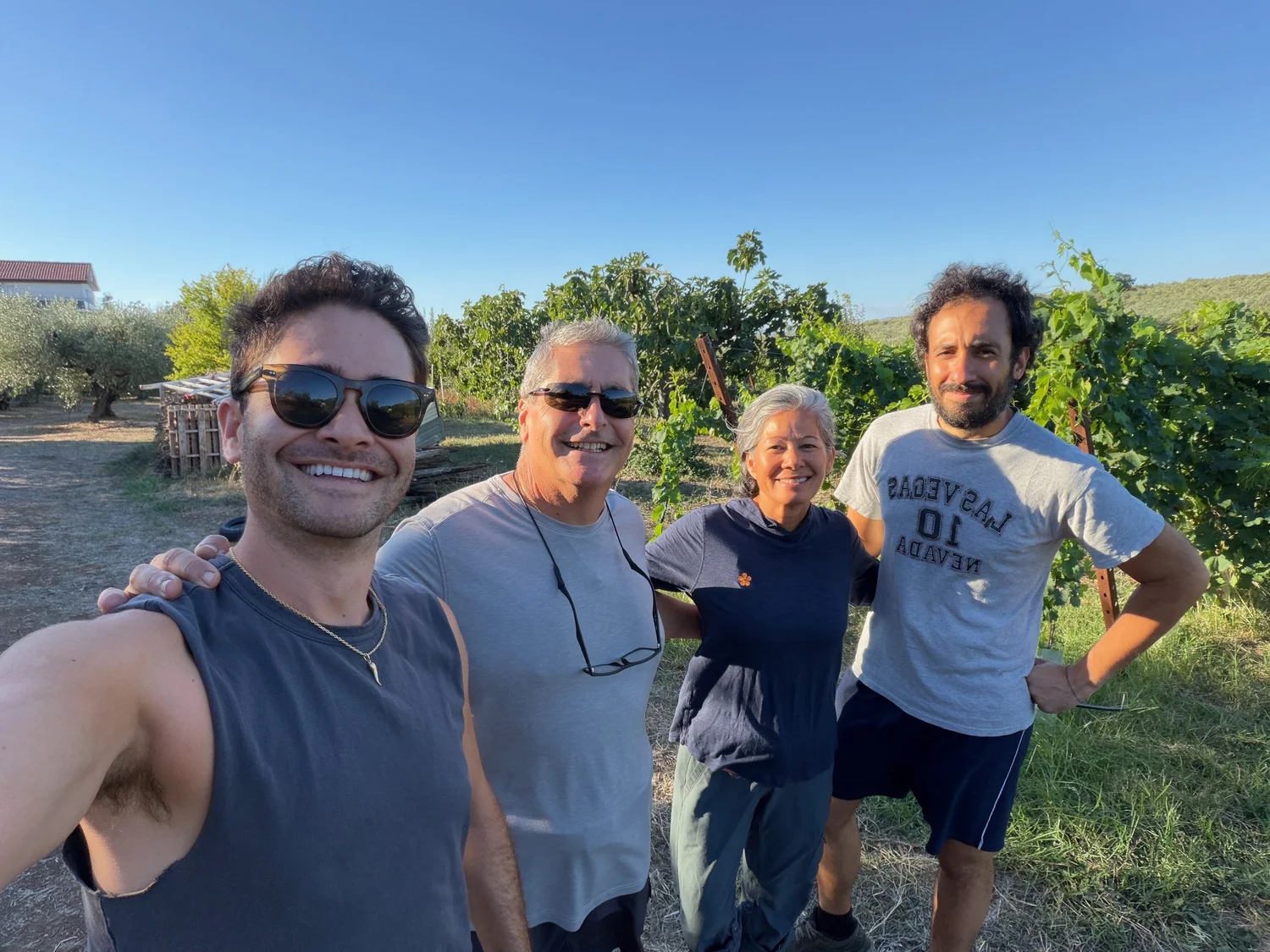
Battipaglia — Gerardina Di Cunzolo, holds the land · Enrico Ferrentino, asked the question · Catarina Ferrentino, feeds everyone who works here. Ventura — Charles Bonsignore, closed the distance with a phone call and a red rose · Nate Bonsignore, prunes, trains, keeps the record. Astoria — Larry Bensel, tastes everything first. From afar — Sebastiano and Kay Rizzi.
The neighbours
Within an hour
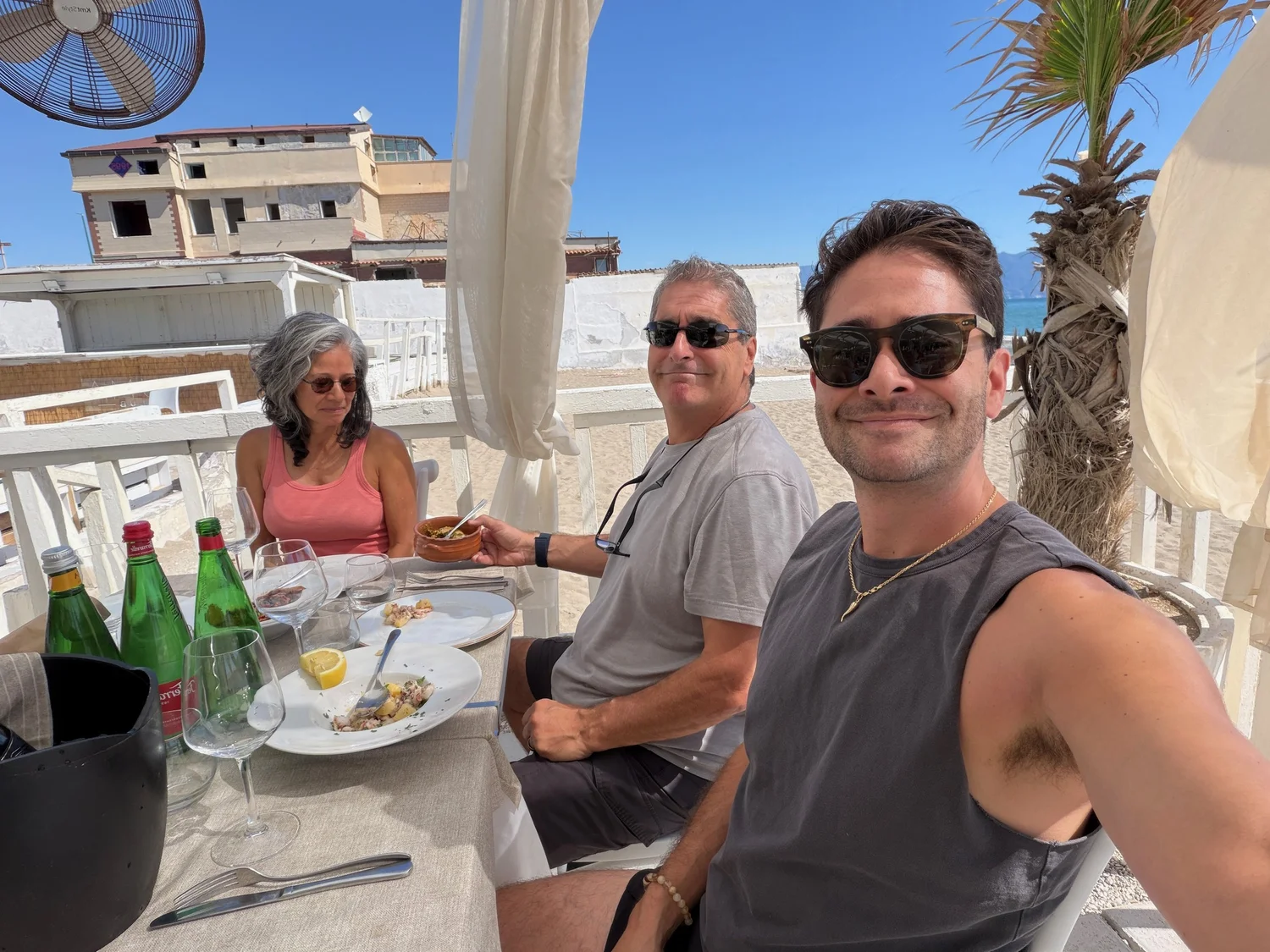
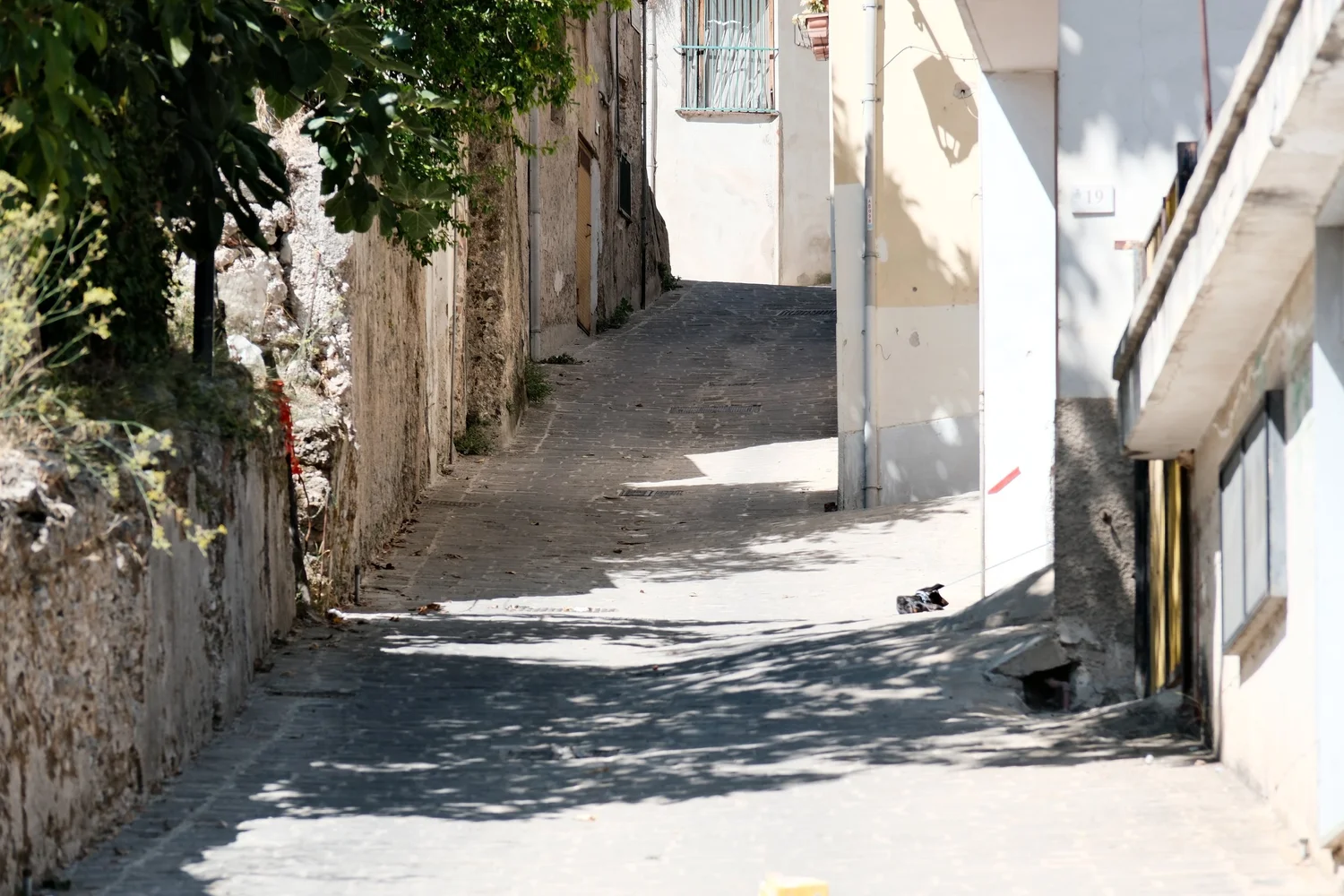
Battipaglia is not a destination. It is the middle of one.
Paestum, 20 minutes — three Greek temples standing in a field since the sixth century BC, and almost nobody in them on a weekday morning. The mozzarella road, 15 minutes — buffalo dairies along the Sele; an hour old, still warm, eaten standing up. The Amalfi coast, 45 minutes — over the hill and down the other side. The Cilento, an hour south — the wildest coastline in Campania. Nobody goes. Go.
We would rather walk you to the dairy ourselves than book it for you.
What we are building
Not a bottle you buy. A place you are invited into.
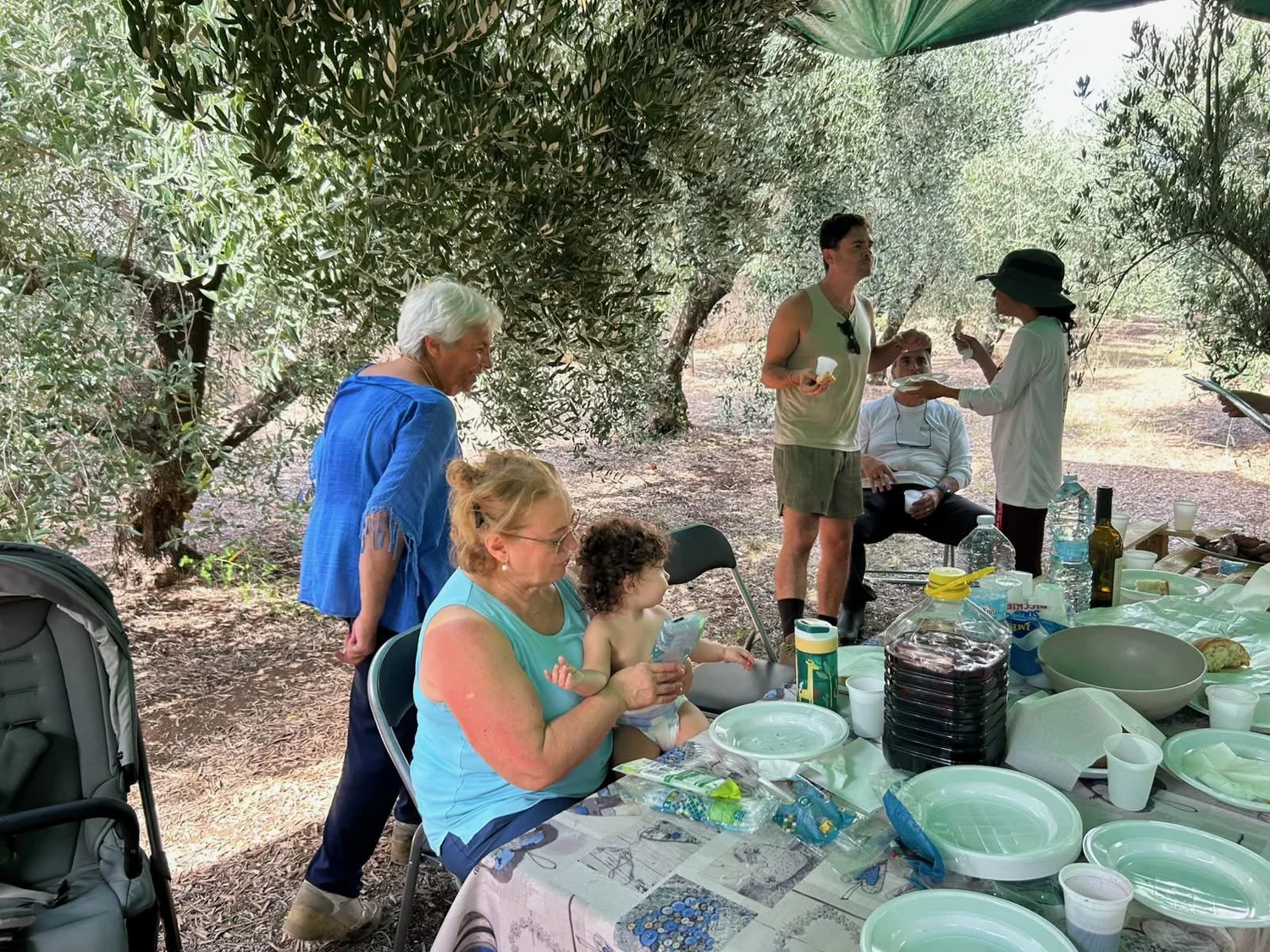
Small groups. Limited seats. Some of it only once a year.
La Vendemmia — pick at dawn, long lunch when it stops. Once a year. La Tavolata — one table down the middle of the rows at dusk; buffalo mozzarella, Paestum vegetables, bread from Battipaglia, music as the light goes. Twice a year. Radici — the blessing of the vines and the first look at what is coming. Not for sale; by invitation.
Nothing is bookable yet. We would rather build it properly than sell seats to something half-made.
The one ask
Letters from the land
Seasonal notes, harvest dates, and first refusal on the small tables we set. A few times a year, when there is something worth saying. It costs nothing, and it is the only way to hear about dates before they are gone.
Photographs from the February 2025 planting by Makoa Freitas.